Dhamma in Cuba
Theravada Cuba
Living the Dhamma Vinaya in Havana. The first Theravada community in Cuba, establishing the authentic Dhamma of the Buddha on the island.
Viviendo el Dhamma Vinaya en La Habana


Living the Dhamma Vinaya in Havana. The first Theravada community in Cuba, establishing the authentic Dhamma of the Buddha on the island.
Viviendo el Dhamma Vinaya en La Habana
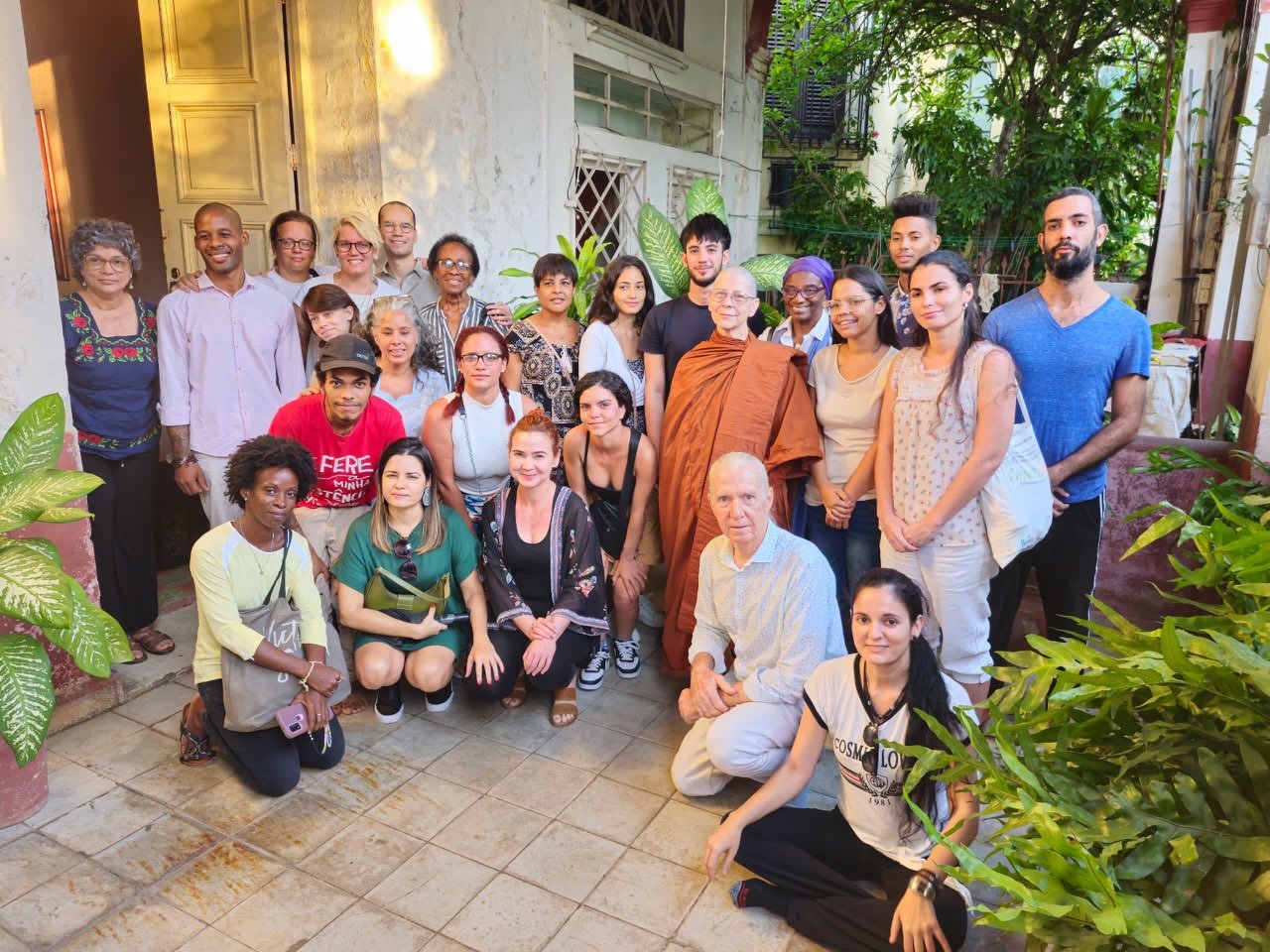
Nestled in the warm embrace of Havana, our community practices the Dhamma Vinaya with Ayya Marajina Bhikkhuni, Theri and our novice Akincano.
Since our first visit in March 2024, we have made six visits in just over a year and a half, sowing the seeds of the authentic Dhamma in Cuban soil. A young, resilient community has emerged as an island of Dhamma instruction.
Cuba is a jewel of the Caribbean. But those who most love this jewel as their homeland are witnesses to a growing national collapse: buildings reduced to rubble for lack of supplies, widespread shortages of fuel and medicine, and a severe equation between wages and inflation.
In this environment, four mosquito-borne viruses — dengue, zika, oropouche, and chikungunya — wreak havoc. Prolonged blackouts cause food spoilage. The sanitation department cannot fulfill garbage collection due to fuel costs.
And yet, amidst this adversity, a young Theravada community has emerged as a resilient island of Dhamma instruction. New members arrive and the word spreads about our presence.
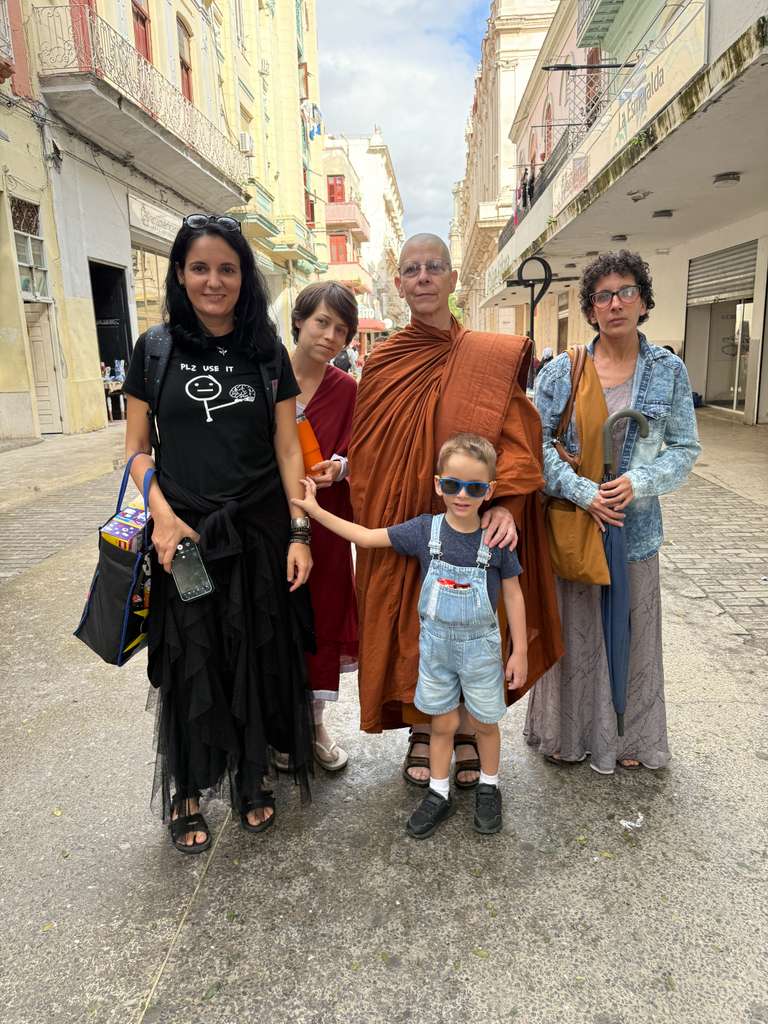
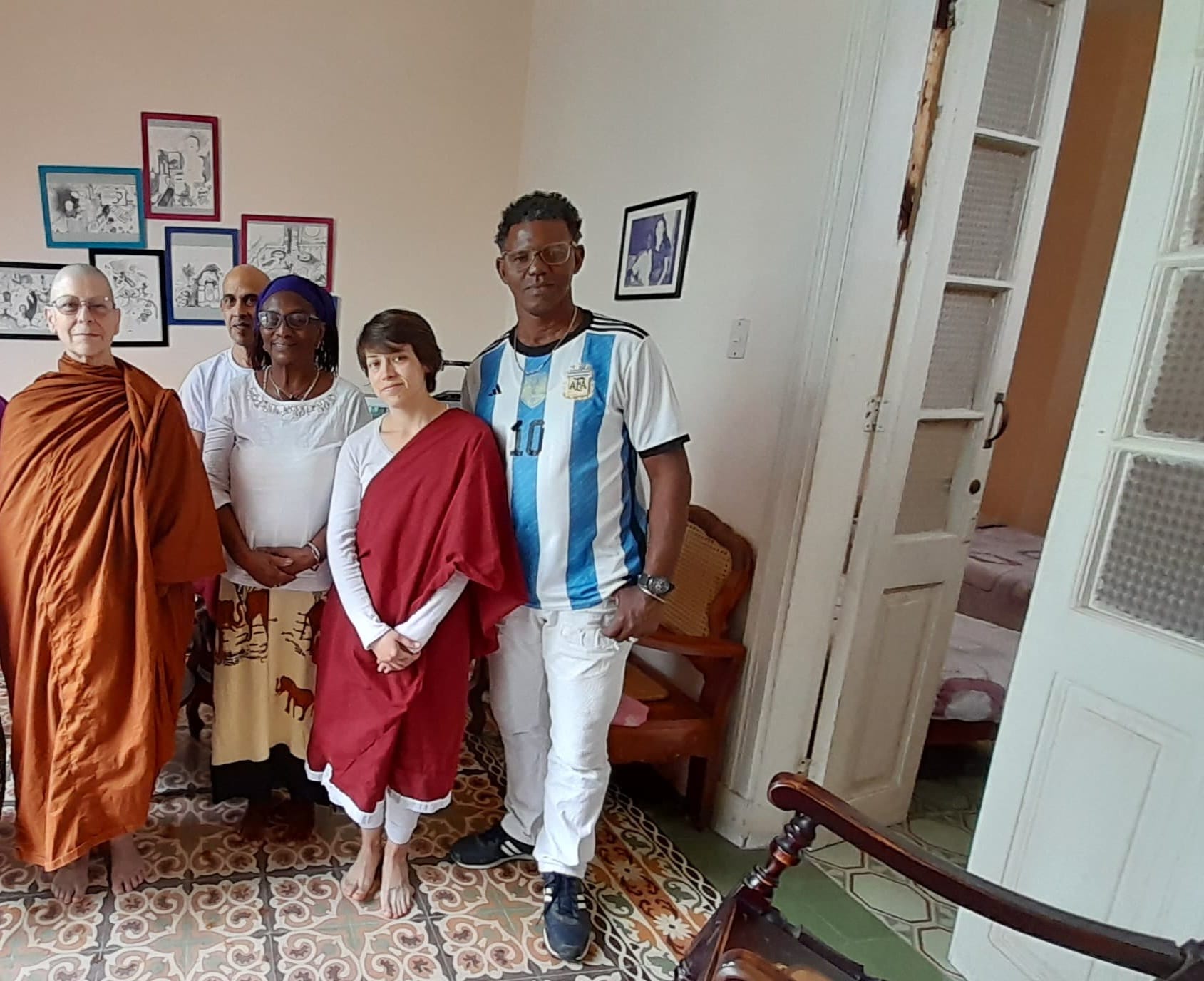
The first Theravada vihara in Cuba opened its doors in February 2026, in Centro Habana, near Cuatro Caminos. It closed in September 2026.
Sanditthiko — "visible here and now" — is one of the attributes of the Dhamma. That was the space we offered to the Spanish-speaking world, our first Dhamma ground on the island.
Our vision for Casa Sanditthiko was to be simple to sustain in line with the Vinaya, accepting what is offered to us, giving more in Dhamma than we receive materially, and living as our own lay practitioner community lives. That vision is unchanged.
Today: Theravada Cuba continues in a house outside Havana, for now in meditative seclusion and not receiving visitors. The online practice has not been interrupted.
At Vihara Sanditthiko we offer a space for authentic contemplative practice in the Theravada tradition.
Guided Samatha meditation sessions that calm the mind and nurture compassion.
Learn the teachings of the Buddha through discussions of the suttas from the Pali Canon.
Half-day retreats where the community connects by sharing experiences of the Dhamma.
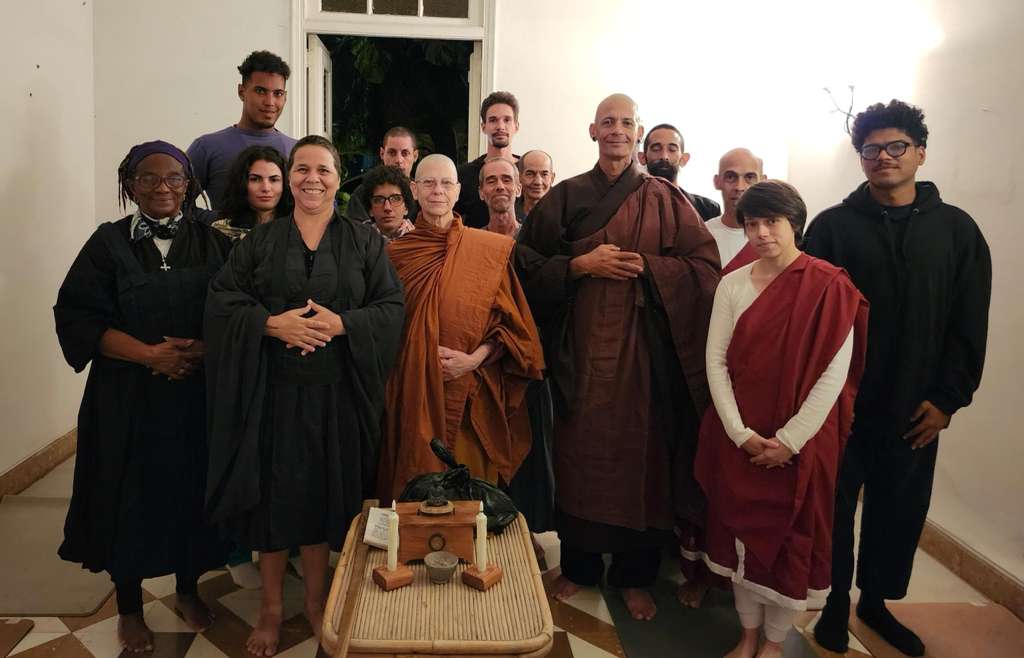
In the midst of economic scarcity, we agreed to live as simply and modestly as the means of our lay community allow, putting our energy into the study, practice, and realization of the Dhamma — which is the true and realizable benefit for Cuba and Spanish-speaking America, here and now.
Our growth is made possible by the generous support of those who understand that the Dhamma knows no political, philosophical, or geographic borders. The Dhamma is visible everywhere, always present, verifiable and realizable by those who make the persistent effort to see.
"Contented and easily satisfied, unburdened with duties and frugal in their ways. Peaceful and calm, wise and skillful, not proud or demanding in nature."
— Karaniyametta Sutta, KP 9Our purpose is not to put bandages on open wounds, but to give the "medicine of the Dhamma" whose prescription was written by the Incomparable Doctor.
Our community gathers regularly for practice, ceremonies, and service to the Dhamma.
Community work sessions at the Vihara combined with meditation practice. Everyone is welcome.
Sunday gatherings at Sanditthiko Vihara to cultivate metta (absence of ill-will) and karuna (compassion).
Ten-Precept ordinations for novices and Eight Precepts of Renunciation for committed community members.
Dhamma desanas at our sister community Kosen Dojo, an established Soto Zen community in Havana and neighboring provinces.
Meetings with Eastern Philosophy classes sharing Dhamma instruction and meditation.
Morning walks along Havana's Malecon, raising eyebrows and raising hope.
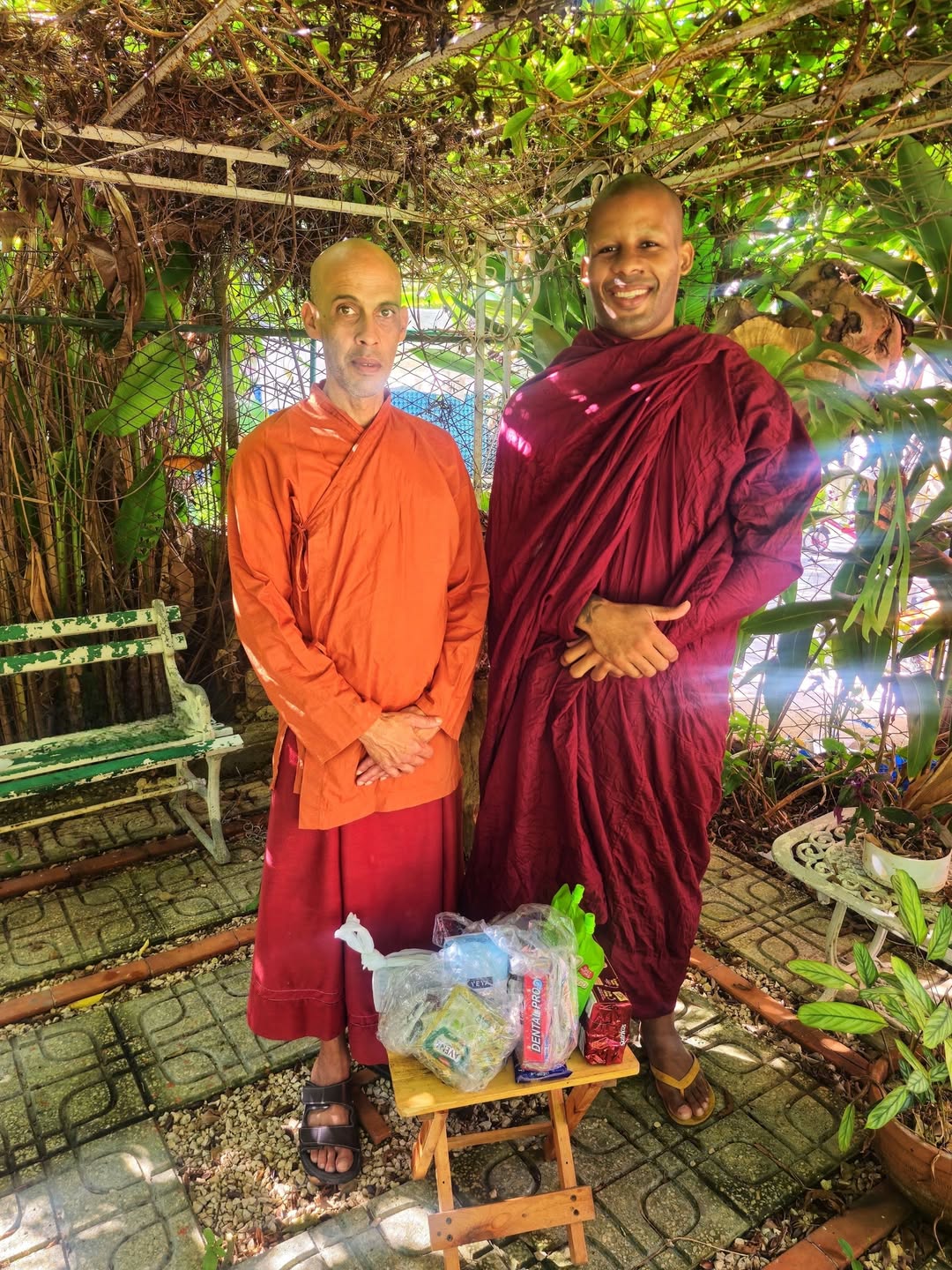
Your generosity allows us to continue our work establishing the Dhamma in Cuba. The plan to rent a hermitage outside Havana has been set aside: the legal complexity of sending donations intended for rent or usufruct exceeds what a young organisation can sustain. What the community would now welcome with gratitude is the donation or rent-free use of a small farm in a quiet area of eastern Havana or Pinar del Río province, with a water well or where one can be dug; the community itself would help restore it. Your generosity also helps provide transportation and the four monastic requisites.
The Dhamma is for everyone. Our work is so that this may be experienced in Cuba and Latin America. Welcome to join us. Welcome to Theravada Cuba.
Our Sanditthiko Vihara — House of Theravada Buddhism — closed its doors in September 2026. The community is alive and the practice continues online. Connect with us.
In a house outside Havana, for now in meditative seclusion
Not receiving visitors
English — Tuesdays 6:00 PM ET
Spanish — Sundays 11:00 AM ET
Copyright 2025, Bhava Nirodha Nilaya. May all beings be happy and free from suffering.